
Maintaining a lush and healthy lawn requires the right mowing practices suited to your specific turf grass. The frequency, height, and technique of mowing are all essential factors in promoting vibrant growth and strong resilience.
Below is a detailed guide to mowing the most common turf grasses in West Texas, along with helpful mower maintenance tips to ensure your lawn stays in top condition.
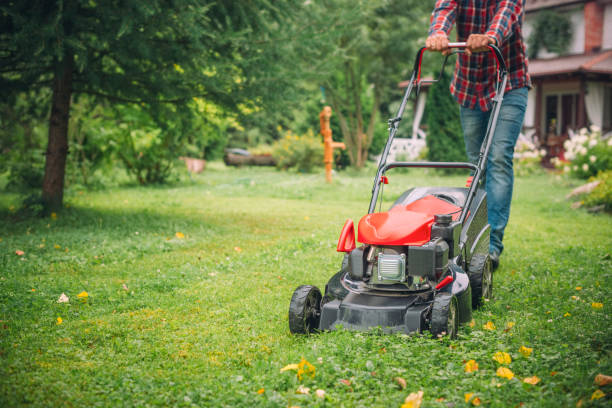
Mowing Tips for Turf Grasses
The mowing frequency and height will change throughout the year based on temperature and the grass’s growth rate. For the first mow of the spring, set your mower to the lowest setting (only 1 notch lower for St. Augustine) to encourage fresh growth and eliminate dormant debris.
As the season continues, gradually raise the mowing height to support deeper root growth and reduce stress on the grass.
General Mowing Guidelines:
- Never cut more than one-third of the grass blade height in a single mow.
- Avoid mowing when grass is wet to prevent clumping and diseases.
- Alternate your mowing direction each week to encourage upright growth and avoid creating ruts.
- Keep mower blades sharp to ensure clean cuts and prevent grass tearing.
Recommended Mowing Heights & Frequency
Spring/Fall Mowing:
- Bermudagrass: 1.5” to 2.0” (Mow every 5-7 days)
- St. Augustine: 2.0” to 2.5” (Mow every 5-7 days)
- Zoysia: 1.5” to 2.5” (Mow every 5-7 days)
- Tall Fescue: 2.5” to 3.5” (Mow every 5-7 days)
- Buffalograss: 2.0” to 3.0” (Mow every 7-10 days)
Summer Mowing:
- Bermudagrass: 2.0” to 2.5” (Mow every 4-6 days)
- St. Augustine: 2.5” to 4.0” (Mow every 4-6 days)
- Zoysia: 2.0” to 3.0” (Mow every 4-7 days)
- Tall Fescue: 3.0” to 4.0” (Mow every 5-7 days)
- Buffalograss: 3.0” to 4.0” (Mow every 7-10 days)
Clipping Management:
- If weeds are present, bagging the clippings helps prevent the spread of weed seeds.
- If no weeds are present, mulching the clippings provides nutrients and helps retain moisture in the soil.
Understanding Your Lawn Mower Settings
Adjusting your lawn mower to the appropriate height setting is vital for maintaining a healthy lawn. Most mowers have adjustable settings to control how much grass is cut with each pass, allowing you to tailor your mowing practices to the needs of your lawn.
Understanding Your Lawn Mower Settings
- Lowest Setting: Typically around 1 inch, ideal for grasses like Bermuda when you need a very short cut in early spring.
- Medium Setting: Around 2-3 inches, perfect for most warm-season grasses during their active growth phase.
- Highest Setting: Around 3-4 inches, recommended for Tall Fescue, St. Augustine, and Buffalograss to support deep root development.
How to Adjust Your Mower’s Height
- Manual Adjustment: On most push mowers, there are levers near the wheels that adjust the cutting height. Make sure to adjust each wheel evenly.
- Riding Mowers: Use the height adjustment lever or dial, which is typically found near the seat or control area.
- Refer to Manufacturer Guidelines: Each mower may have different height increments, so check the manual for specific instructions.
Setting the proper height ensures your grass remains healthy, minimizing stress and encouraging strong growth.
Mower Maintenance for a Healthier Lawn
Proper mower maintenance is just as essential as mowing technique for keeping your lawn in optimal shape. A well-maintained mower provides clean cuts, reduces grass stress, and increases the longevity of your equipment.
1. Cleaning the Undercarriage
- Turn off the mower and disconnect the spark plug to prevent accidental starts.
- Use a stiff brush or putty knife to remove accumulated grass clippings.
- Spray the undercarriage with water and mild detergent to avoid mold and buildup.
- Allow the mower to dry completely before storing it.
2. Sharpening Mower Blades
- Dull blades rip the grass, leaving it brown and frayed, which increases disease risk.
- Remove the blade using a wrench, then secure it in a vice.
- Sharpen the blade with a metal file, bench grinder, or sharpening stone, maintaining the existing angle.
- Reattach the blade and ensure it’s balanced before putting it back on the mower.
3. Checking Tire Pressure
- Uneven tire pressure can cause scalping in some areas and higher cuts in others.
- Check tire pressure before each mowing session and adjust according to the manufacturer’s recommendations.
4. Changing the Oil and Air Filter
- Change the oil at least once per season or every 25-50 hours of operation.
- Replace or clean the air filter to boost engine efficiency and prevent overheating.
5. Inspecting Cables and Spark Plugs
- Regularly check cables and spark plugs for wear.
- Replace the spark plug once per season to ensure easy starting and optimal performance.
Maintaining your mower properly ensures a cleaner cut and a healthier, more vibrant lawn.
Troubleshooting Common Mowing Issues
Ensure your mower blades are sharp to achieve clean cuts.
Increase mowing height and/or mow more frequently.
Vary your mowing direction weekly and cut back on watering before mowing.
Level the lawn (using a roller) and/or raise the mower height.
Preparing Your Lawn for Success
Mowing is not just about aesthetics—it plays a crucial role in the health and longevity of your turf. By adhering to these mowing and maintenance practices, you’ll help your grass remain strong, vibrant, and thriving throughout the year.
No matter if you’re growing Bermudagrass, St. Augustine, Zoysia, or Tall Fescue, the correct mowing height and proper mower upkeep are key to achieving a successful, healthy lawn.